Textile mills and garment processors deal with hundreds of variables daily, including machine settings, fabric lots, water hardness, and temperature. But one variable that consistently disrupts operations and gets underestimated in boardroom conversations is textile chemical procurement. The wrong auxiliary at the wrong time doesn’t just delay a batch.
It creates shade variation, failed audits, rework costs, and in worst cases, a failed shipment to a global brand. Yet procurement decisions for textile auxiliaries are still made on price alone in a large chunk of the industry. That’s a costly habit.
Having worked with textile manufacturers across India for over four decades, we at Neochem have seen this pattern play out more times than we can count. The challenges in sourcing textile chemicals are systemic, and they demand a supplier relationship that goes beyond transactions. As a textile chemical supplier in India, we have seen how procurement decisions directly influence production stability and export readiness.
Here’s a clear look at what’s actually going wrong in textile chemical procurement, and how the right manufacturer partnership solves it.
1. Inconsistent Product Performance Across Batches
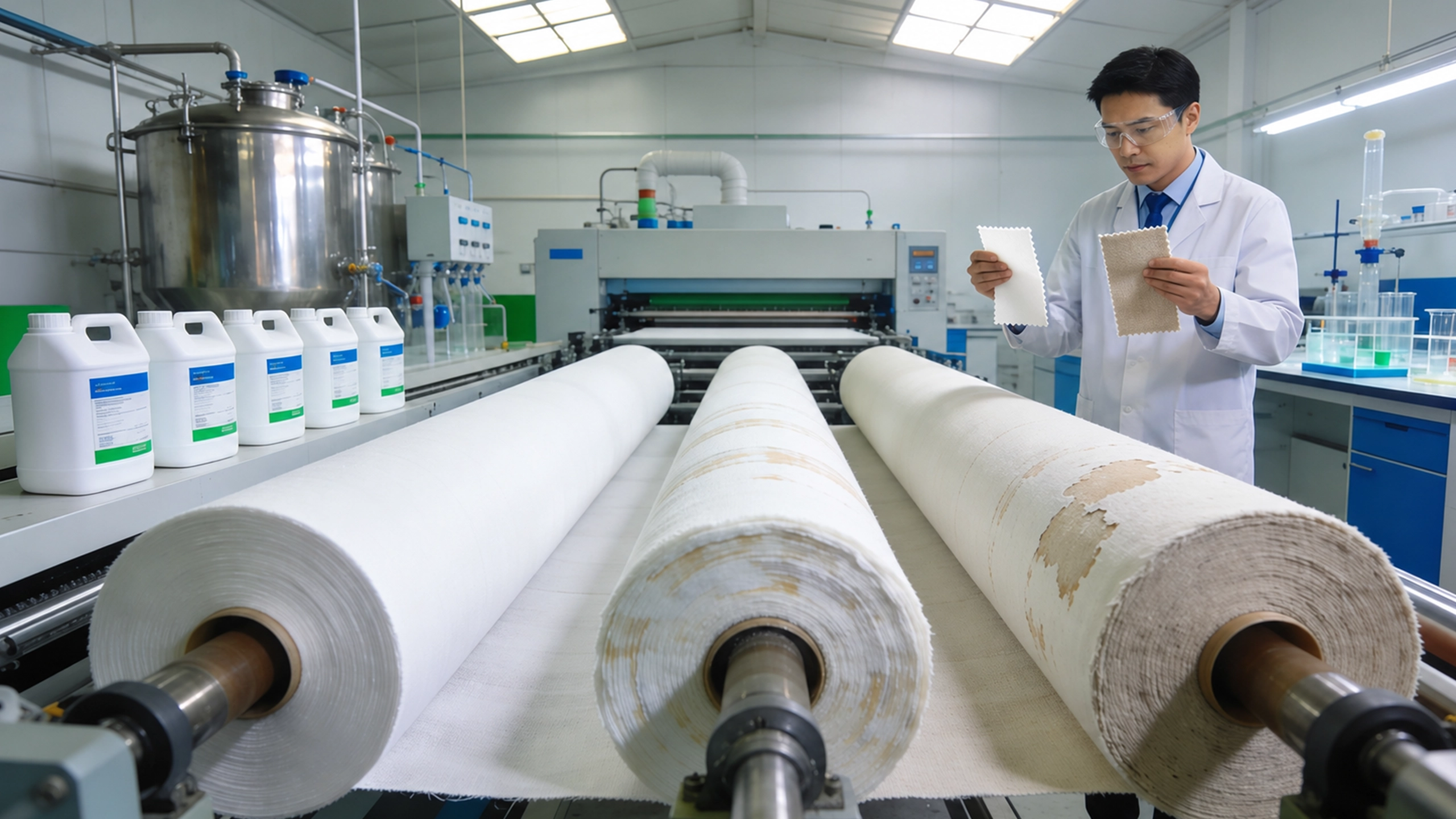
This is probably the most common and most damaging procurement problem in the textile processing industry. A mill trials a wetting agent or softener, gets good results, places a bulk order, and then finds the second or third lot behaves differently. Shade shifts. Absorbency drops. The finish feels off.
The root cause is almost always raw material inconsistency at the supplier’s end, combined with inadequate quality control during manufacturing.
Smaller or fragmented chemical suppliers often source actives opportunistically, meaning the formulation you bought last quarter may not be the same as what arrives today.
At Neochem, our manufacturing is done at our facility on the Sarkej-Bavla Highway with defined input specifications and in-process quality checks. Products like our Klaritol Pro 8700, a low-foaming wetting and scouring agent, are formulated to deliver consistent performance on both natural and synthetic fibres, batch after batch.
When a processor runs the same recipe on greige knitted cotton week after week, they need the chemical to behave the same way. That level of chemical quality textile processors expect can only come from disciplined manufacturing and process control.
The same principle applies to desizing operations, where inconsistency can affect absorbency, dye uptake, and downstream processing.
Products such as Klarizym AHT Conc. and Klarizym AHT are designed for controlled enzymatic desizing across high-temperature processing conditions, helping processors achieve reliable preparation results on cotton, rayon woven fabrics, and denim.
Consistency in such critical pretreatment stages is only possible when formulations are manufactured and quality-controlled to perform predictably from one batch to the next.
2. The Compliance Burden: ZDHC, GOTS, and What Brands Actually Demand
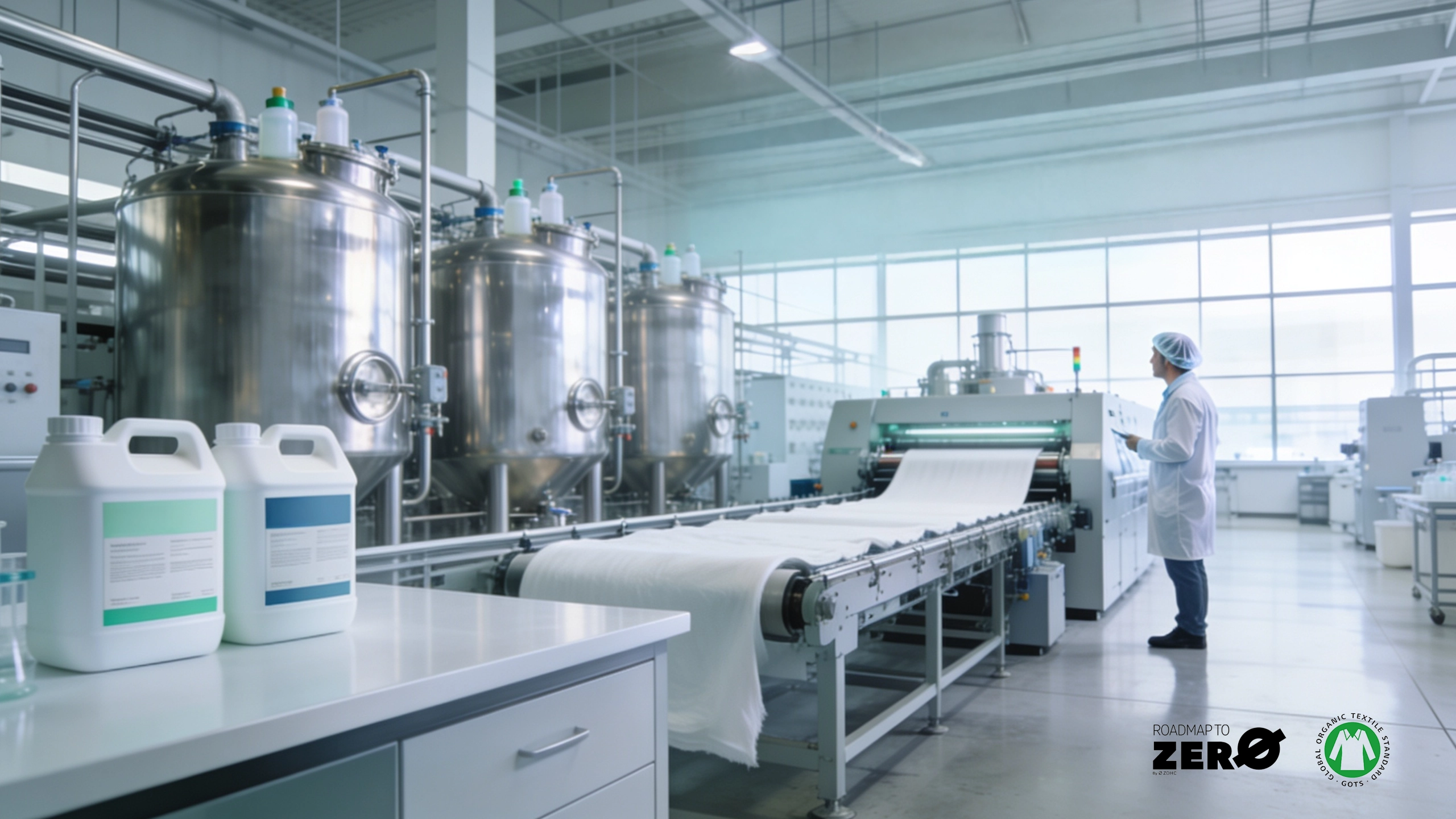
Global apparel brands are no longer accepting self-declarations. H&M, Zara, PVH, and similar buyers now require their manufacturing supply chains to demonstrate ZDHC MRSL conformance, meaning the chemicals used in wet processing must be verified against the Manufacturing Restricted Substances List. GOTS certification adds another layer for organic textile processing.
For a dyeing or finishing unit supplying these brands, this creates a real procurement problem: you can only be compliant if your chemical supplier is compliant. And a large portion of the Indian market still operates with auxiliaries that are not ZDHC-listed or tested.
Neochem achieved ZDHC recognition in 2022 and holds GOTS 7.0 certification. As a ZDHC Level 3 – certified textile chemical company, we understand how important verified compliance has become for export-focused processors. What this practically means for our customers is that when a brand auditor walks into your facility and asks for chemical compliance documentation, you have it.
Our 390 products total are listed on the ZDHC Gateway, and we provide the necessary Safety Data Sheets and compliance certificates as a standard part of procurement, not as an afterthought. For industries focused on organic and sustainable processing, working with a GOTS compliant auxiliary supplier significantly reduces audit risk and strengthens long-term brand partnerships.
3. Dealing with a Fragmented Supplier Base
Most textile processing units source from 8 to 15 different chemical suppliers, a wetting agent from one, a sequestrant from another, softeners from a third. On the surface, this looks like risk diversification. In practice, it creates operational chaos.
- Application support is siloed, nobody owns the full process
- Different products interact unpredictably in the same bath
- Managing COAs, SDS documents, and delivery schedules across multiple vendors is a full-time job
- When something goes wrong with quality, accountability gets diffused
The smarter model is consolidating with a supplier that covers the full textile value chain, pretreatment, dyeing, printing, and finishing, with a technical team that understands how products interact across stages.
At Neochem, our textile auxiliaries range spans all four process stages.
As a textile auxiliary manufacturer reliable enough to support large-scale processing operations, we focus on process continuity rather than isolated product sales.
- Pre-treatment: Wetting agents, scouring agents, sequestrants, peroxide stabilisers, Peroxide killer and desizing agents including enzymatic solutions such as Klarizym AHT Conc. and Klarizym AHT for controlled desizing across demanding processing conditions.
- Dyeing: Dispersing Agents, Levelling agents, sequestrants, anti-crease lubricants, dye fixing agents, and speciality auxiliaries such as Evenol DLR Plus, a high-performance levelling agent for reactive dyeing, and Evenol LDA, a versatile dye bath conditioner and washing-off aid that supports consistent dyeing and printing performance.
- Printing: Thickeners, binders, dispersing agents, fixation accelerators, and pigment printing systems including Primaprint USB Plus and Primaprint HFSS, which help deliver softness, print sharpness, and fastness performance across a range of substrates.
- Finishing: Softeners, silicone emulsions, durable C0 and C6 water repellents, UV protection agents, anti-pilling solutions, flame retardants, and specialty performance finishes, including the Revilon range of organic softeners for cellulosic and synthetic blends.
Our technical support team works directly with process chemists at customer facilities, not just at the point of sale, but when something needs to be adjusted on the floor. Strong coordination across the supply chain textile chemicals ecosystem becomes critical when mills are managing multiple production schedules simultaneously.
That kind of continuity is what a fragmented multi-supplier approach cannot provide.
4. Hidden Cost of Cheap Procurement
Price-driven procurement in textile chemicals almost always ends up being expensive. The math looks simple upfront, a cheaper softener saves ₹8 per kg, but the downstream calculation often tells a different story.
Consider a scenario where a lower-cost wetting agent requires an additional bath to achieve the same absorbency. That extra bath means:
- Higher water consumption
- Additional steam and energy for heating
- Longer machine cycle time
- Lower production throughput per shift
We’ve seen customers reduce processing cycles significantly by switching to the right product. A 50% reduction in cycle time, for instance, effectively doubles the productive output of the same machine without any capital investment.
Similarly, a single multipurpose auxiliary that replaces two separate chemicals doesn’t just reduce per-unit cost, it simplifies inventory, reduces storage risk, and cuts down reorder complexity.
Our Revilon series of plant-origin cationic softeners, including Revilon CEQ Plus and Revilon CEQ, which are hydrophilic and suitable for cellulosic and synthetic blends, are good examples of this thinking. Better textile chemical cost management comes from evaluating overall process efficiency rather than only comparing purchase prices.
The same principle applies during pretreatment. Products such as Klaritol Pro-DSX, which combines desizing and scouring in a single bath, help reduce process steps, chemical handling, water consumption, and machine occupancy. Similarly, low-foaming systems such as Klaritol KLF and Klaritol KLF Plus are designed to improve process efficiency while reducing operational disruptions associated with excessive foam generation.
Instead of running separate products for different fabric types, processors work with one well-formulated product that handles the range. Less inventory, fewer variables, cleaner results.
The real question procurement teams should ask isn’t “what is the price per kg?” It’s “what is the cost per metre of finished fabric?”
5. Supply Continuity and the Risk of Single-Source Fragility
During COVID-19 exposed a fundamental vulnerability in specialty chemical supply chains that the textile industry had been ignoring. Importers and resellers, who make up a significant portion of the textile auxiliaries market, were caught with empty shelves when international shipments stopped. Mills faced shutdowns not because of demand collapse, but because a wetting agent or peroxide stabiliser was unavailable.
Domestic manufacturers with their own production infrastructure and raw material planning are inherently more resilient partners.
At Neochem, with our manufacturing facility in Moraiya, Ahmedabad and regional distribution across North, East, West, and South India, supply continuity is built into our model.
Maintaining consistent supply textile auxiliary capabilities across regions helps processors avoid production delays and urgent sourcing disruptions.
We also hold buffer inventory at distributor stock points, which means a mill in Surat or Tirupur doesn’t face a two-week lead time every time they need to restock.
6. Application Support: The Gap Most Suppliers Don’t Fill
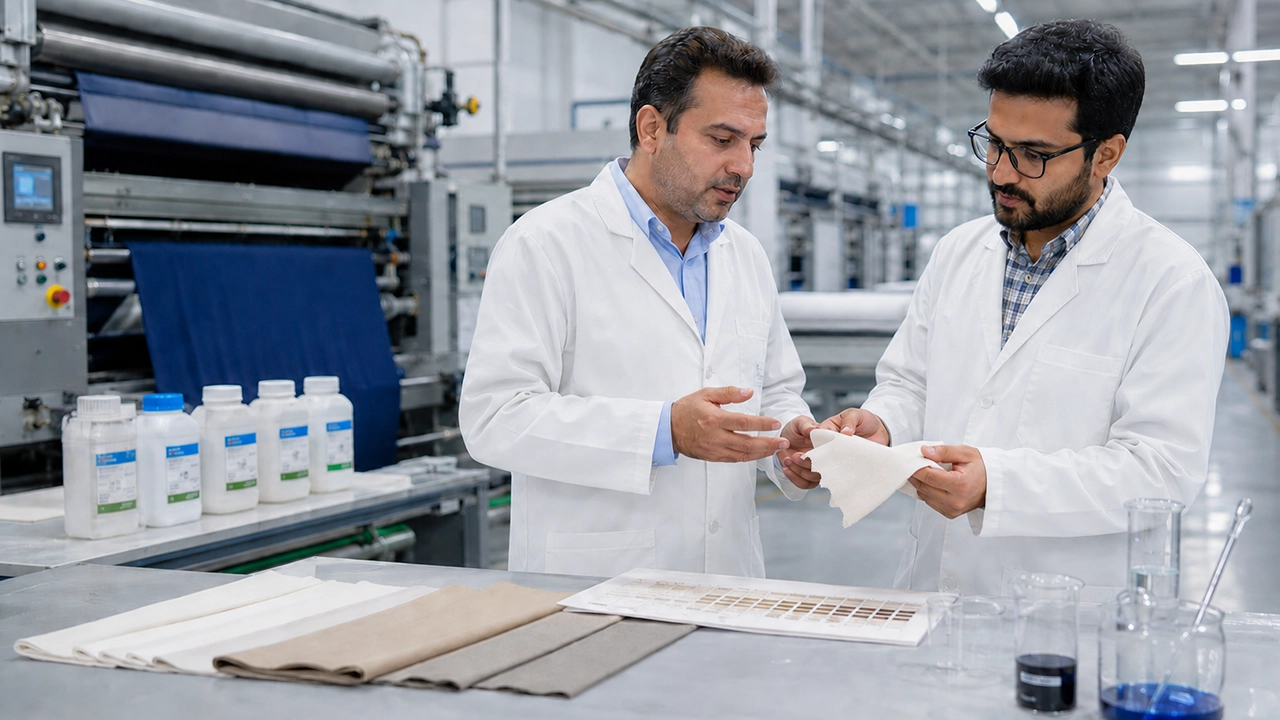
When a technician at a processing unit sees shade variation in a reactive dyeing batch, they don’t need a brochure. They need someone who understands whether the issue is sequestrant dosage, water hardness, pH drift, or bath ratio, and can advise in real time.
Most chemical suppliers sell the product and disappear. Technical support, if it exists at all, is over the phone with someone reading from a product data sheet.
Neochem’s approach is application-driven. Our technical team works with customers on process troubleshooting, dosage optimisation, and formulation adjustments.
This level of support becomes increasingly important in specialty chemical procurement textile operations where process variables directly affect export quality standards.
This is especially valuable when a customer is moving to more sustainable chemistries, for example, switching from conventional softeners to our plant-origin alternatives, where process parameters sometimes need recalibration.
Choosing the Right Textile Auxiliaries Partner
The textile auxiliaries market in India is crowded. There are hundreds of suppliers, and the price-quality-service tradeoff varies enormously. When evaluating a chemical procurement partner for your processing operations, the questions worth asking are:
- Do they manufacture, or are they reselling imported products?
- Are their products ZDHC-listed and GOTS-certified?
- Can they support you across pretreatment, dyeing, and finishing, or only in one stage?
- What does their technical support actually look like on the floor?
- Do they have a track record across different fabric substrates and processing conditions?
At Neochem, we’ve been in this industry since 1979. Our 350+ product range, our sustainability certifications, our plant-based innovation in softeners and sequestrants, and our distribution network are all built with one purpose, to make sure the businesses we supply can grow responsibly and compete globally.
Working with a certified textile auxiliary supplier helps textile processors strengthen compliance readiness, operational stability, and long-term manufacturing efficiency.
Textile chemical procurement doesn’t have to be the variable that costs you orders, audits, or quality reputation. The right supplier makes it the variable that works in your favour.
Explore Neochem’s full range of textile auxiliaries or reach out to our team at sales@neochem.in to discuss your processing requirements.