
Colour consistency today directly impacts production efficiency, product quality, and brand credibility across industries. In textile processing, coatings, plastics, printing inks, and packaging, manufacturers are expected to achieve sharper shades, stronger fastness properties, lower processing costs, and environmentally responsible production standards simultaneously.
This growing demand has significantly expanded the role of dyes, pigments, and auxiliary chemistries within industrial manufacturing, increasing the importance of the specialty chemical dye industry and the growing demand for specialty chemicals for dyes and pigments in achieving stable and scalable production outcomes.
For textile processors in particular, achieving the right shade is only one part of the process. Production teams also need to manage water consumption, batch reproducibility, machine efficiency, chemical compatibility, and compliance with global sustainability standards.
The chemistry behind dyes & pigments directly influences operational consistency and process optimisation at every stage.
At Neochem, this evolution has shaped how specialty chemical solutions are developed for textile and industrial applications. The focus extends beyond colour performance towards improving process stability, reducing environmental impact, and enabling efficient manufacturing outcomes at scale across the growing landscape of dye manufacturing in India.
In this blog, we explore the different dyes & pigments, their types, functions, and industrial applications, along with their growing importance in sustainable industrial manufacturing.

Understanding Dyes and Pigments
Although dyes & pigments are both used to impart colour, their chemistry, behaviour, and industrial application differ significantly.
Dyes are soluble colourants that penetrate and chemically bond with the substrate. In textiles, this allows the colour to become part of the fibre structure itself. Depending on the fibre type and processing method, dyes may form ionic, covalent, or intermolecular bonds that contribute to wash fastness and shade durability.
Pigments, on the other hand, are insoluble particles. They remain dispersed within the application medium and often require binders or film-forming systems for surface adhesion.
Dyes are widely preferred in textile dyeing, leather finishing, paper colouring, and ink formulations, while pigments are commonly used in coatings, plastics, construction materials, and printing applications.
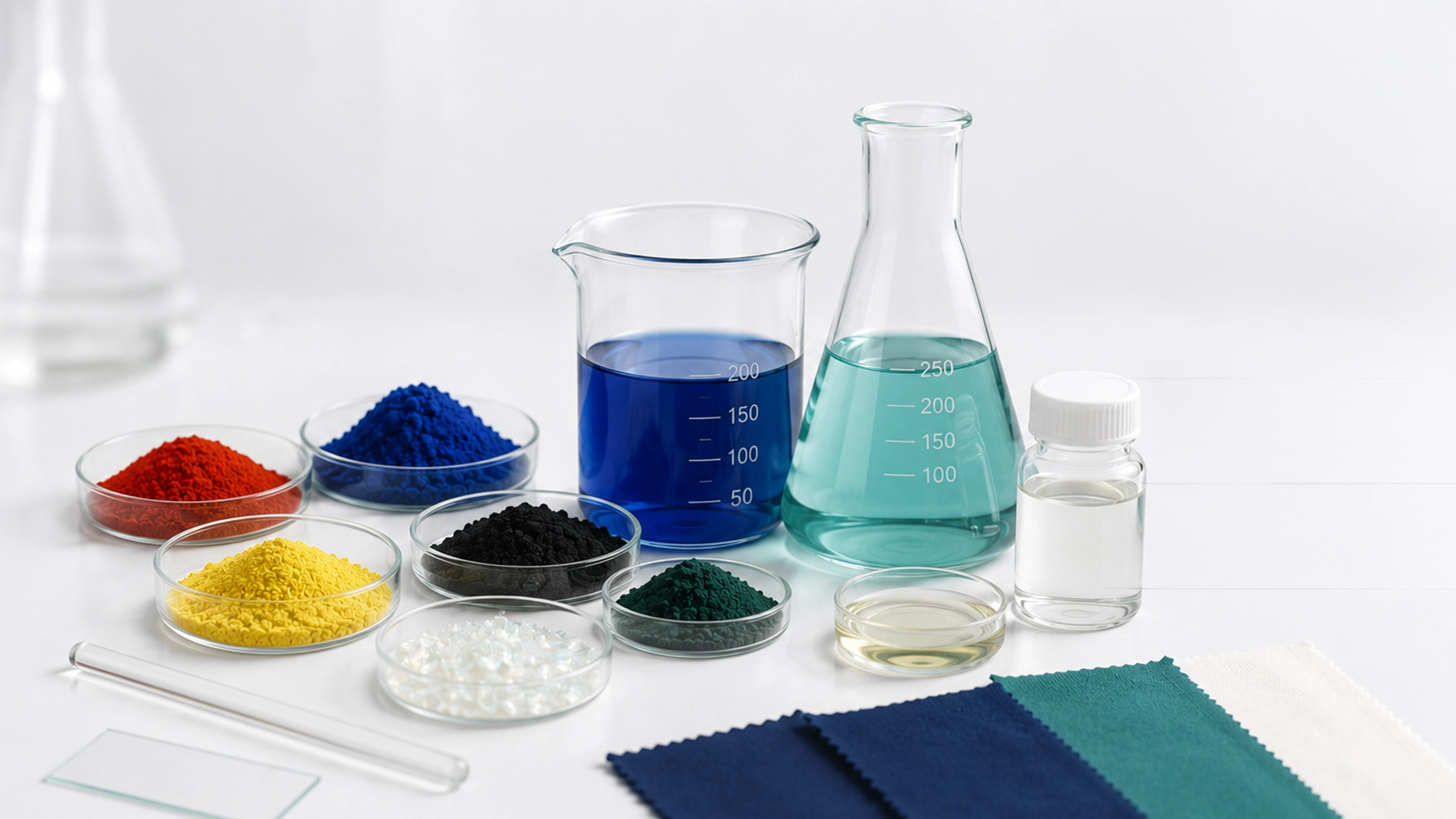
Types of Specialty Chemicals Used in Dyes & Pigments
Azo Dyes and Pigments
Azo chemistry remains one of the largest colourant categories due to its versatility and cost-performance balance. These colourants are commonly used in textile dyeing, printing inks, packaging, and plastic coloration.
Modern formulations increasingly incorporate advanced dye auxiliary chemicals to improve fixation, process efficiency, and environmental compliance.
Phthalocyanine Pigments
Phthalocyanine pigments are recognised for strong blue and green shades along with exceptional durability.
Industries prefer these pigments because they offer:
- High heat resistance
- Excellent lightfastness
- Strong weather resistance
- Long-term colour stability
These pigments are commonly used in automotive coatings, exterior paints, plastic masterbatches, and industrial printing systems.
Anthraquinone-Based Colourants
Anthraquinone compounds are widely used where brightness and performance consistency are essential.
Their applications include vat dyes for textiles, specialty plastics, synthetic fibres, and technical textile coloration. These systems are often supported by advanced liquid dye formulation stability solutions to maintain storage performance and application uniformity.
Inorganic and Effect Pigments
Inorganic pigments such as titanium dioxide and iron oxides are valued for durability and opacity in construction chemicals and industrial coatings.
Meanwhile, metallic, pearlescent, and fluorescent pigments are increasingly used in luxury packaging, decorative printing, cosmetics, and automotive finishes.
The Role of Specialty Chemicals for Dyes and Pigments
Industrial coloration systems rely heavily on auxiliary chemistries to improve processing stability, colour consistency, and end-product durability.
Dispersing Agents
Pigment dispersion is one of the most critical stages in coatings, inks, and textile printing.
Poor dispersion can cause:
- Shade inconsistency
- Speck formation
- Reduced gloss
- Processing instability
A high-performance pigment dispersant helps maintain uniform particle distribution and prevents agglomeration during production.
Advanced dispersants pigment production systems are also used to improve viscosity control, colour strength, and long-term formulation stability.
In textile dyeing, levelling and dispersing agents perform a similarly important role by promoting uniform dye distribution and reducing the risk of shade variation.
Products such as Evenol DLR Plus support consistent reactive dyeing on cellulosic fibres and their blends, while Evenol LDA serves multiple functions including dye bath conditioning, washing-off support, oligomer control in polyester dyeing, and machine cleaning.
For critical shades where dye solubilisation becomes particularly challenging, auxiliaries such as Evenol DST help improve colour consistency and processing reliability.
De-Dusting Oils and Anti-Dusting Agents
In dye and pigment manufacturing, powder handling can lead to dust generation that affects operational efficiency and workplace safety. Neochem’s specialised de-dusting oils and anti-dusting agents are designed to coat dyestuff particles, helping minimise dust formation during blending, pulverisation, and handling while improving process cleanliness.
Textile Auxiliaries
Textile processing involves multiple stages where auxiliaries directly influence dye uptake, process stability, and fabric performance.
Key textile auxiliary functions include:
- Improved wetting and penetration
- Controlled dye exhaustion
- Enhanced fixation
- Reduced foam generation
- Fabric finishing performance
Modern processing systems increasingly rely on specialised antifoam dye manufacturing solutions to minimise foam-related machine inefficiencies during high-speed operations.
At Neochem, textile remains a core industry focus, with formulation approaches designed around reproducibility, cycle-time reduction, and sustainable manufacturing objectives.
This includes specialised dyeing auxiliaries that support multiple stages of the coloration process. Alongside levelling and dispersing agents, alkali donors such as Evenol SAR Powder and Evenol SAR Liquid help optimise reactive dye fixation while simplifying dosing and process control.
These supporting chemistries contribute to improved reproducibility and more efficient dye utilisation across textile processing operations.
Anti-Foams and Defoamers
Foam control is essential for maintaining stable processing conditions across dye, pigment, and textile manufacturing operations. Neochem provides specialised antifoams and defoamers that help reduce surface tension, eliminate trapped air, and improve process efficiency by controlling unwanted foam in industrial process liquids.
UV Stabilizers and Fixing Agents
UV absorbers help prevent colour fading and polymer degradation in coatings, plastics, and industrial packaging applications.
Fixing agents improve wash fastness and reduce dye bleeding in textile dyeing, especially for reactive dye systems and export-quality garments.
Fixing Agents
In textile dyeing, fixing agents improve wash fastness and reduce dye bleeding, especially in reactive dye systems and export-quality garments.
Efficient fixation chemistry also contributes to lower water consumption during washing cycles, supporting both operational efficiency and sustainability goals.
Modern dye fixation technologies are increasingly designed to improve fastness performance while minimising tonal variation. Solutions such as Dyfast DTF Plus, Dyfast PMD Plus, and Dyfast FFC Ultra help enhance wash fastness in reactive and direct dyeing applications, enabling processors to achieve more durable colour performance while reducing the likelihood of reprocessing and shade-related quality issues.
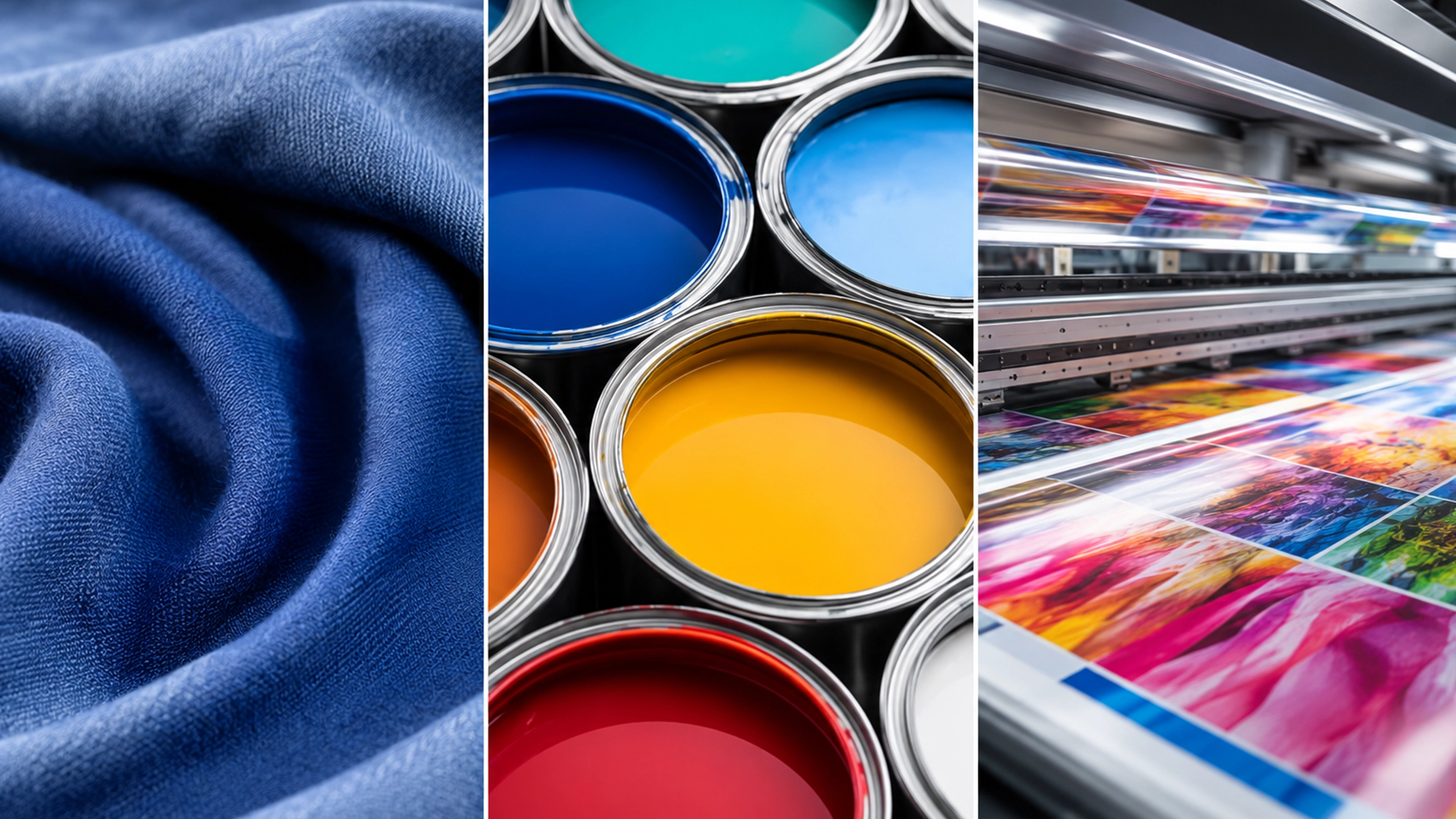
Industrial Applications of Dyes & Pigments
Textile Industry
Textiles remain one of the largest consumers of dyes and pigments globally.
Applications include:
- Reactive dyeing
- Disperse dyeing
- Textile printing
- Functional finishing
- Garment processing
Modern textile processors increasingly demand sustainable systems that reduce water usage and improve production consistency. This has accelerated innovation within the specialty chemical dye industry.
Innovation has also extended to post-dyeing process optimisation. Advanced washing-off systems such as Ampinol RDP, Ampinol RDP-CW, and Ampinol ESS Ultra help remove unfixed dyes more efficiently, improving colour fastness and reducing back-staining risks.
Similarly, foam-control technologies such as Kolapsol ST, Kolapsol AFD, and Kolapsol DA support stable machine operation by minimising foam generation during dyeing and processing, particularly in high-speed and high-turbulence manufacturing environments.
The growth of dye manufacturing India has also strengthened demand for process-efficient and compliant specialty chemical solutions.
Paints and Coatings
Paint and coating applications require pigments capable of delivering both aesthetics and durability.
Specialty chemical systems support corrosion resistance, gloss control, weather resistance, and surface protection in automotive and industrial environments.
Plastics Industry
Plastic coloration requires pigments capable of withstanding elevated processing temperatures during extrusion and moulding.
Specialised systems such as pigment paste stabilizer technologies help maintain dispersion consistency and colour uniformity across long production cycles.
Printing Inks
Printing ink formulations depend heavily on pigment dispersion quality and rheological control.
Specialty chemicals help achieve fast drying, print sharpness, surface adhesion, colour vibrancy, and rub resistance across packaging and industrial labelling applications.
In many powder-processing systems, manufacturers also utilise de-dusting oil for dyes to minimise airborne particles and improve handling efficiency during production.
The Growing Shift Towards Sustainable Chemistry
Industrial buyers today evaluate chemistry not only on performance but also on environmental impact and regulatory compliance.
This shift has accelerated demand for:
- Bio-based formulations
- Low-VOC systems
- Water-saving chemistries
- ZDHC-compliant products
- Sustainable textile auxiliaries
At Neochem, sustainability is integrated into product development through plant-origin chemistries, process-efficient auxiliaries, and formulations designed to reduce environmental load without compromising industrial performance.
For textile manufacturers specifically, sustainable chemistry is increasingly linked to operational competitiveness. Lower water usage, shorter processing cycles, and improved chemical efficiency contribute directly to cost optimisation and global compliance readiness.
Chemistry That Enables Better Industrial Performance
The role of specialty chemicals for dyes & pigments has expanded far beyond coloration. Today, these chemistries influence process efficiency, sustainability performance, durability, compliance standards, and production economics across industries.
For textile processors, coatings manufacturers, ink formulators, and plastic producers, the right chemical systems help improve operational stability while supporting increasingly complex market expectations.
At Neochem, our approach combines technical expertise, application-focused development, and sustainability-driven innovation to deliver specialty chemical solutions aligned with modern industrial requirements. From textile auxiliaries and dispersants to performance additives and eco-conscious formulations, the focus remains on enabling efficient, responsible, and growth-oriented manufacturing outcomes across industries