
An antimicrobial textile finish adds an antimicrobial agent to fabric to inhibit bacteria, fungi and mould.
Textiles that are worn close to the body or used in humid, high-contact environments quickly accumulate sweat, moisture, and organic residues.
These conditions can support the growth of bacteria and other microorganisms, resulting in unpleasant odour, reduced freshness and, in some cases, fabric deterioration. This makes antimicrobial performance particularly relevant for sportswear, innerwear, healthcare garments and home textiles that experience frequent use and laundering.
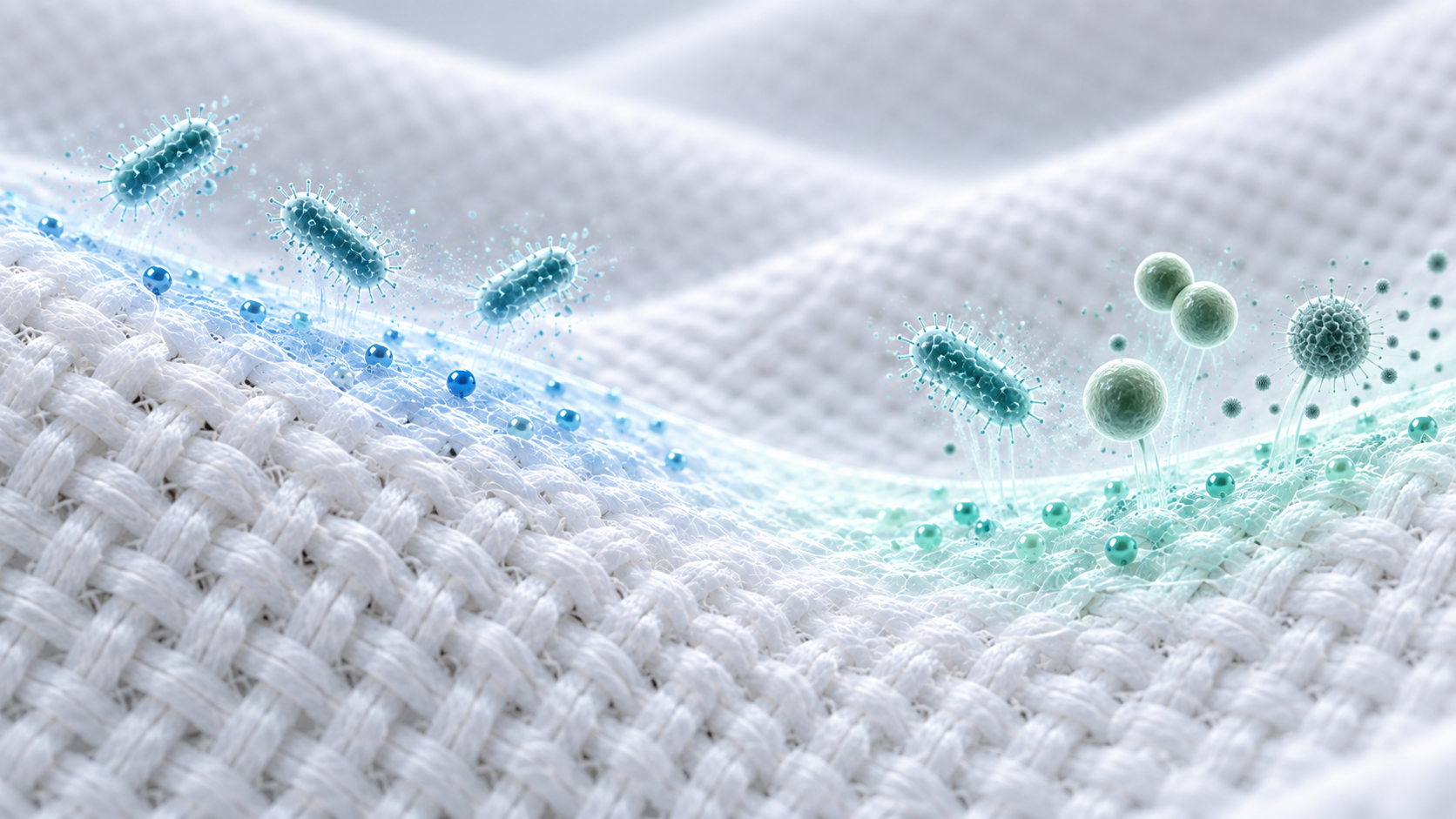
Antimicrobial textile finishes address this challenge and, depending on the chemistry, can target specific microorganisms. The choice of finish, however, needs to go beyond the antimicrobial claim. Fibre type, fabric construction, application method, laundering conditions and end use can all influence performance.
For textile manufacturers, the focus is therefore on selecting a finish that delivers reliable microbial control without compromising the fabric’s intended performance, handle or appearance.
What Is an Antimicrobial Finish on Fabric?
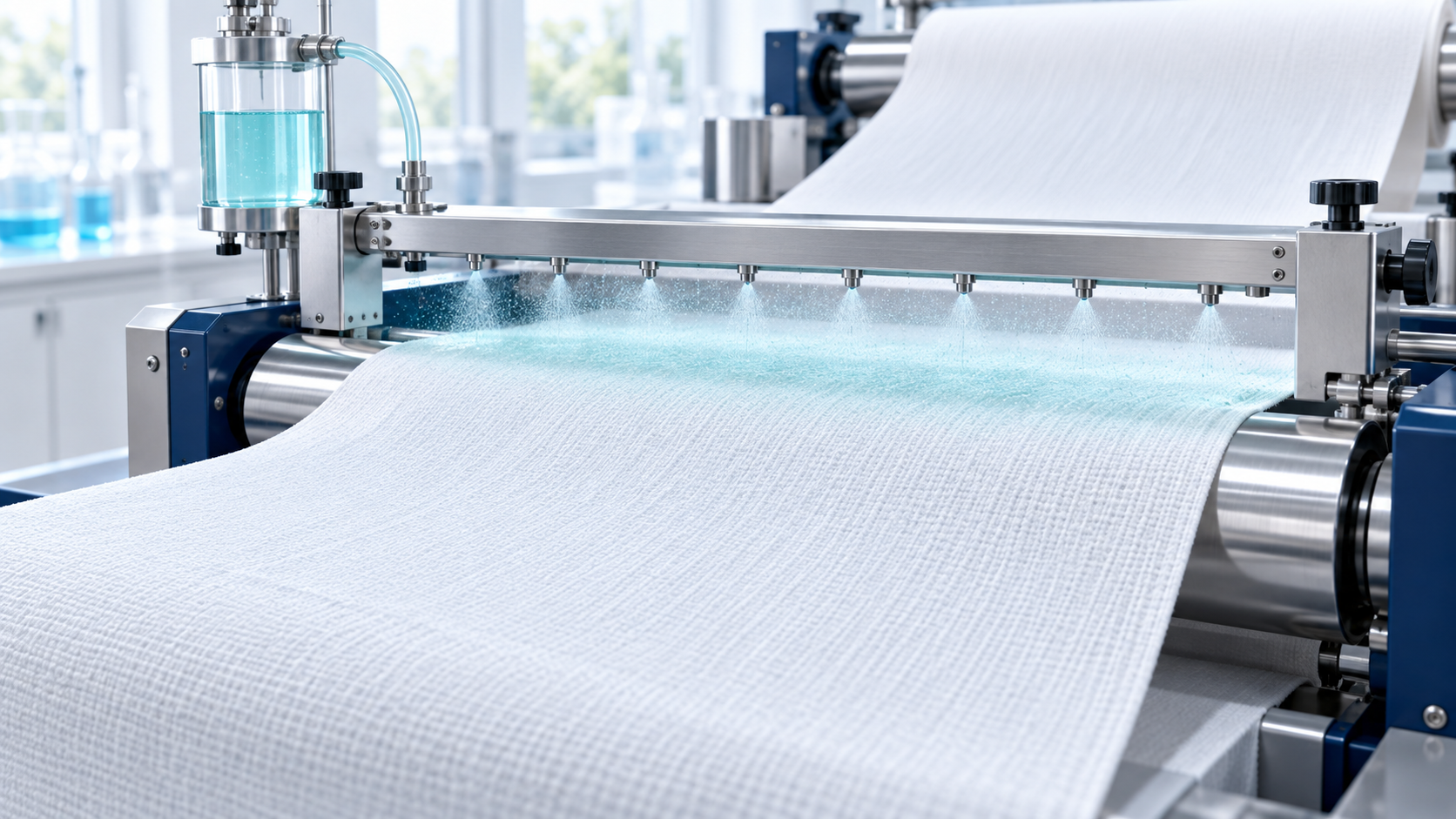
An antimicrobial finish is a chemical or biological treatment applied to fabric to inhibit or control microorganisms such as bacteria, fungi and mould. An antibacterial agent, by comparison, specifically targets bacteria.
The distinction matters because different textile applications have different requirements. Sportswear may need to control odour-causing bacteria, while healthcare fabrics may require broader antimicrobial protection. A hygienic finish for fabrics should therefore be selected based on the intended end use, required durability and application process.
How Do Antimicrobial Textile Finishes Work?
The chemistry behind an antimicrobial finish determines how effectively it controls microorganisms and how well it withstands laundering. Textile antimicrobial systems generally work through two approaches:
| Feature | Leaching (controlled-release) finishes | Bound (non-leaching) finishes |
|---|---|---|
| How it works | Releases active substances onto the fabric surface to act against microorganisms | Retains active functionality on the fibre surface and acts on contact |
| Wash durability | Decreases as the active is depleted through use and washing | Better resistance to repeated laundering when properly applied and cross-linked |
| Typical use | Applications with lower wash demands | High-wash textiles such as activewear, medical textiles, innerwear and home textiles |
Different active agents work through different mechanisms. Silver-based antimicrobials, for example, can interfere with microbial cellular functions, while quaternary ammonium compounds can disrupt microbial cell membranes.
For textile processors, performance depends not only on the active ingredient but also on the fibre, formulation, application method and curing conditions.
Antimicrobial vs Antibacterial: What Is the Difference?
An antibacterial finish targets bacteria. An antimicrobial finish is a broader category that can include activity against bacteria, fungi, mould and other microorganisms, depending on the active chemistry and the performance claim being evaluated.
The terms should therefore not be treated as interchangeable. A manufacturer developing an odour-control finish should identify the microorganisms relevant to the intended use rather than selecting a chemistry based only on the word “antimicrobial”.
Which Fabrics Benefit Most From Antimicrobial Treatment?
Synthetic fibres such as polyester and nylon are common substrates for odour-control applications, particularly where sweat and repeated use can contribute to bacterial growth. Cotton and blends can also be treated effectively with the right chemistry and process.
The finish should always be matched to the fibre, end use, moisture management and laundering conditions without compromising the fabric’s intended performance.
Where Are Antimicrobial Textile Finishes Used?
Antimicrobial finishes are used across textiles where hygiene, odour control or wash durability are important. Medical textile finishes include scrubs, lab coats and hospital bedding, where the treatment must withstand repeated laundering without affecting fabric comfort.
In sportswear and activewear, antimicrobial finishes help control odour caused by perspiration and are often paired with moisture-management finishes. Innerwear benefits in the same way, where the finish supports freshness in close-to-skin use. Home textiles such as towels, bedding and kitchen fabrics also benefit from added microbial control due to frequent moisture exposure.
For technical textiles, the finish should be selected according to the specific performance requirement. A durable antibacterial treatment designed for a high-wash garment may not suit every application.
How Is Antimicrobial Performance Tested?
Antimicrobial performance is established through laboratory testing rather than the active ingredient alone. ISO 20743:2021 and AATCC TM100 are established methods for evaluating antibacterial activity in finished textiles.
Testing may assess:
- Microbial reduction
- Activity against specific bacteria
- Performance after washing
- Durability under intended use conditions
A strong initial result does not necessarily indicate long-term performance. Substrate, application conditions and wash durability also need to be considered.
What About Wash Durability?
Antimicrobial durability depends on the chemistry, substrate and application conditions. Leaching finishes may lose active material through washing, while suitably bonded systems can provide longer-lasting performance.
At Neochem, durability is considered part of the overall finishing system. Prestofin AM is designed to provide antimicrobial and antibacterial performance through 30 to 50+ wash cycles, depending on application and process conditions, across medical textiles, activewear, innerwear, home textiles and technical fabrics.
How We Approach Antimicrobial Finishing at Neochem
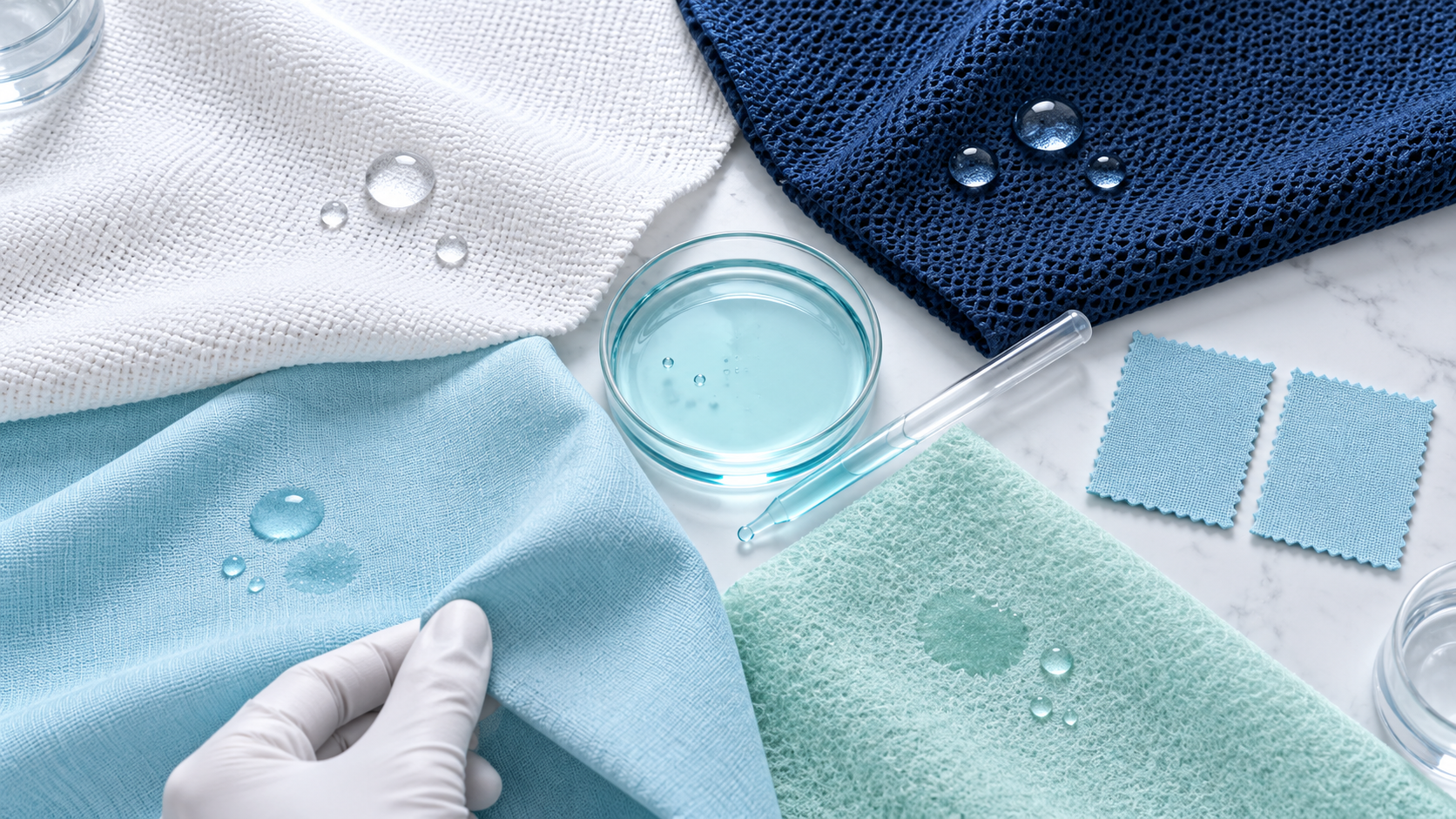
As a supplier of textile specialty chemicals, we believe antimicrobial finishing begins before the finishing bath. The condition of the textile substrate can directly influence how consistently a functional finish performs.
Our Klaritol Series, including Klaritol Pro 8700, Klaritol Pro-LTS and Klaritol CBS, supports scouring and wetting by removing oils, waxes and other impurities, helping create a cleaner and more uniformly absorbent substrate.
Prestofin Cross-Linking Resins, including Prestofin R-PC, Prestofin R-LF and formaldehyde-free Prestofin R-FFC, can support durable anchoring of functional finishes to suitable fibre substrates.
For activewear and performance fabrics, Glidex ASP complements antimicrobial finishing with moisture management, wicking and anti-static properties.
This application-driven approach is central to how we develop textile specialty chemicals, considering the fibre, process and end application as one finishing system.
Choosing the Right Antimicrobial Finish for Textile Applications
Antimicrobial finishing works best when treated as part of the textile process rather than an isolated performance claim. The right antimicrobial agent needs to complement the fibre, pretreatment, finishing conditions and intended end use while delivering reliable durability.
At Neochem, we develop textile specialty chemicals with this complete process in mind. From substrate preparation with the Klaritol Series to functional finishing with Prestofin AM, cross-linking systems and moisture-management solutions such as Glidex ASP, we consider how different chemistries work together.
For manufacturers, this approach helps deliver antimicrobial performance that remains consistent through processing, laundering and everyday use.
To discuss the right antimicrobial finish for your fabric and process, get in touch with our team.